Beyond textbooks: 12 experiments that changed how kids see science
Our most-loved hands-on STEM activities — and the learning science behind why they work.
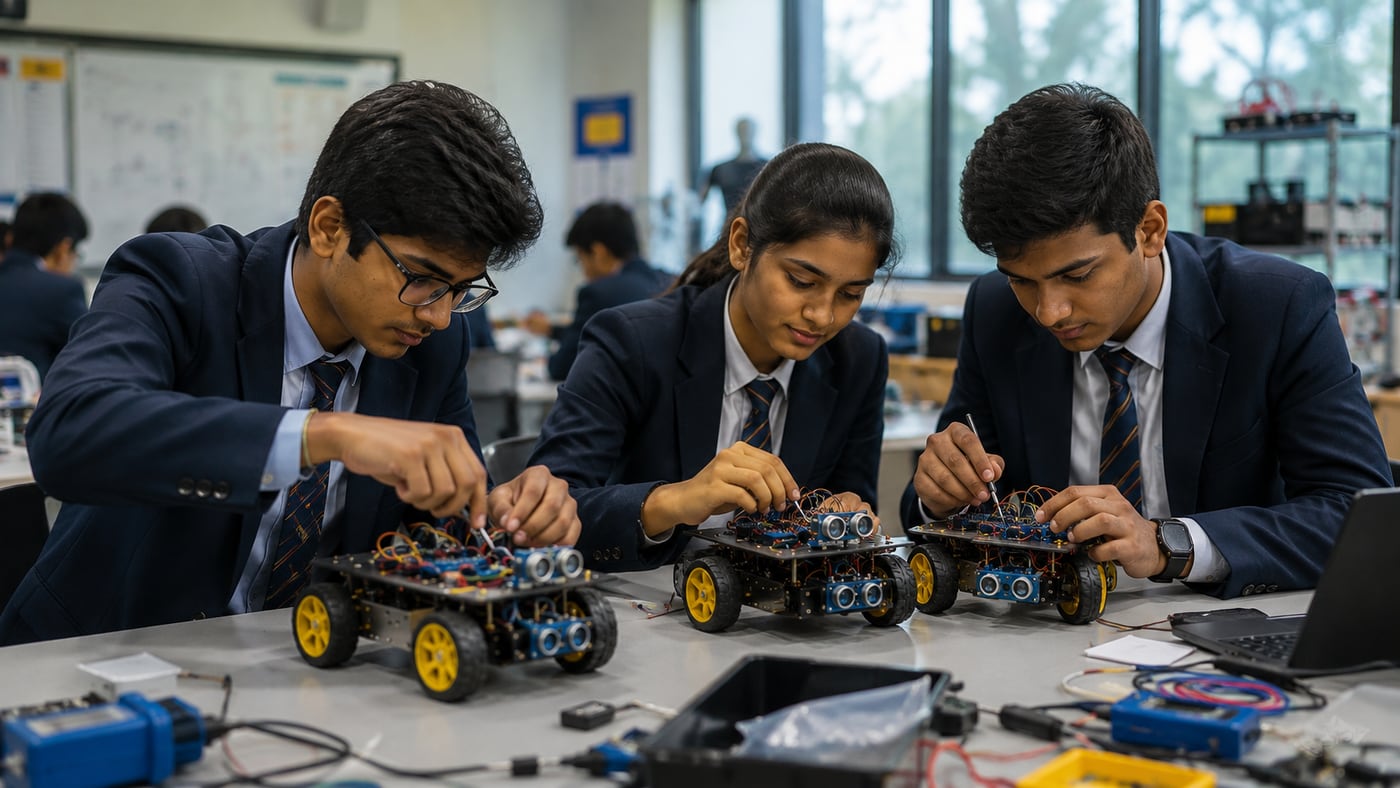
Ask a class of eleven-year-olds what science is and you will usually get a description of a textbook chapter. Ask the same class after an afternoon of building circuits, and the answer changes shape entirely. Science stops being something to memorise and becomes something you do.
Over the past four years we have run hands-on sessions in thousands of classrooms across twenty-two states. A handful of activities come up again and again as the ones that shift how students think — not because they are spectacular, but because of what they ask of the student.
What makes an experiment stick
The activities that work share a structure. They begin with a question the student can genuinely predict the answer to, and they end with a result the student can check for themselves. The gap between prediction and result is where the learning happens.
- The setup takes under ten minutes, so most of the period is spent thinking rather than assembling.
- Failure is informative — a circuit that does not light tells you something specific.
- Materials are cheap enough that every student gets their own, not one demonstration at the front.
- The result is visible from across the room, so discussion happens naturally.
The moment a student stops asking whether their answer is right and starts asking why it came out that way, the lesson has done its job.
Prediction before demonstration
One change improves almost any practical activity: ask for a written prediction before anything is switched on. It takes ninety seconds and it converts a demonstration into an experiment. Students who have committed to an answer pay attention to the outcome in a way that passive observers do not.
This also gives the teacher something valuable — a record of what the class believed beforehand. Misconceptions that would otherwise stay hidden become visible and addressable.
Where to start
Schools beginning this work often want to overhaul everything at once. We suggest the opposite. Pick one topic per term where the practical version replaces the explanation entirely, run it properly, and see what changes. The evidence from your own classrooms will be more persuasive than anything we could tell you.