
Why every Indian school needs a robotics program by 2026
From problem-solving to career readiness — the case for making robotics a core subject, not an elective.
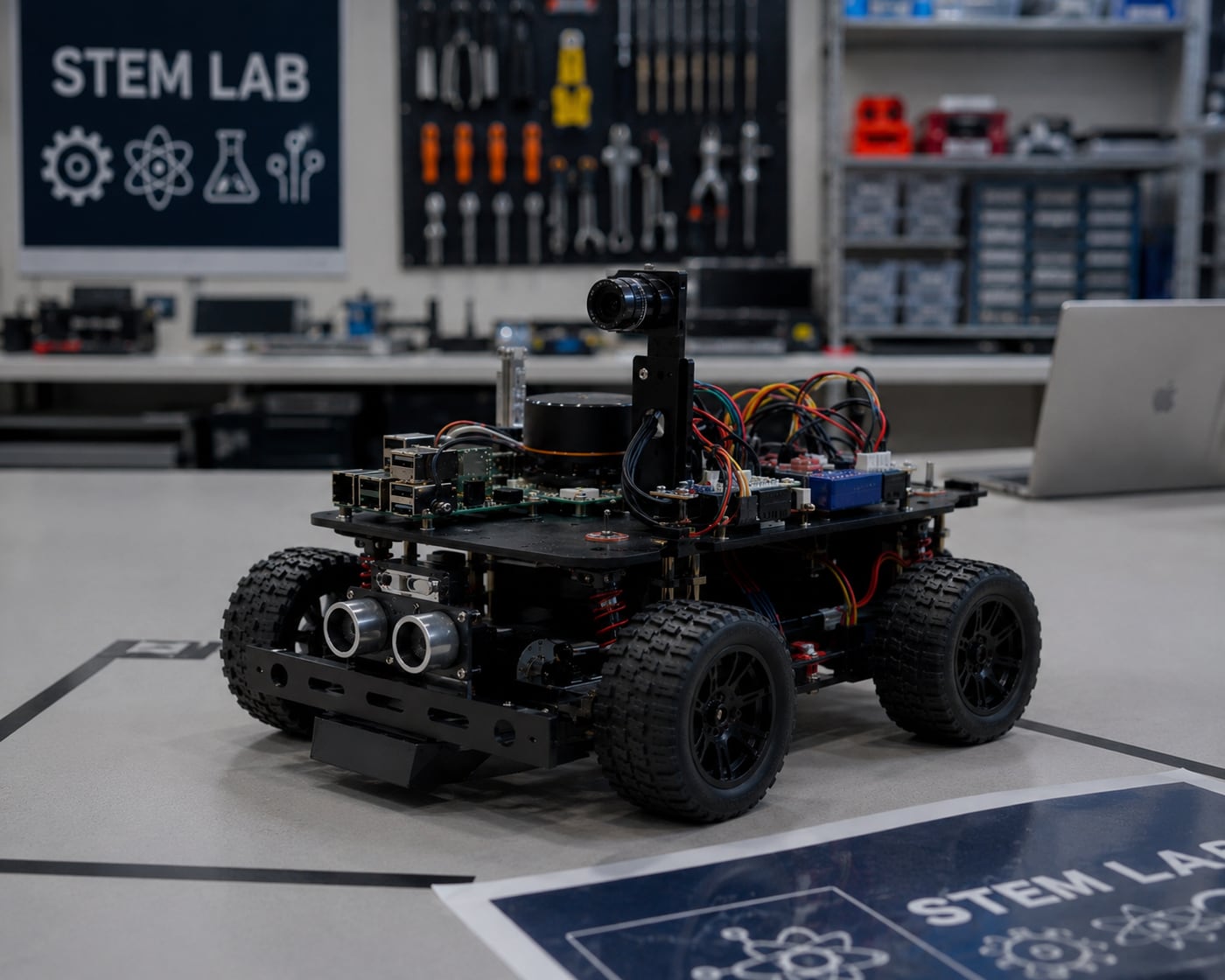
Robotics is still treated as an enrichment activity in most Indian schools — a club that meets on Saturdays, funded from whatever is left over. That framing made sense when robotics was a specialism. It makes considerably less sense now.
It is a thinking subject, not a technical one
The most valuable thing a student takes from building a robot is not the wiring. It is the habit of breaking a vague goal into steps a machine can follow, then debugging the steps when the goal is not met. That is the same discipline that underlies mathematics, writing and experimental science.
Students who spend a term on robotics tend to get better at a specific thing: staying with a problem that has not worked yet. In a system that rewards speed and correct answers, sustained productive struggle is unusually hard to teach — and robotics teaches it almost incidentally.
A robot that does not work is not a failed project. It is the only kind of feedback that cannot be argued with.
The policy case
NEP 2020 asks schools to build experiential, competency-based learning into the core curriculum rather than bolting it on. The Atal Tinkering Lab programme has already put equipment into thousands of schools. In many cases the infrastructure exists and the timetable has not caught up with it.
- Lab equipment sitting unused is a more common problem than lack of equipment.
- Teacher confidence, not student ability, is usually the limiting factor.
- Programmes that survive are the ones with timetabled hours, not optional sessions.
- Assessment matters — what is not assessed is quietly treated as optional.
What a serious programme looks like
A robotics programme worth running has scheduled hours, a teacher who has been trained rather than volunteered, and projects that end in something demonstrable. It does not need the most expensive kits available. It needs consistency, and it needs to be treated as a subject rather than a treat.
Schools that get this right rarely go back. The change shows up first in the students who were disengaged by conventional teaching — which is, after all, the point.